
Custom vs. Semi-Custom vs. Production: What San Antonio Home Buyers Actually Get at Each Level
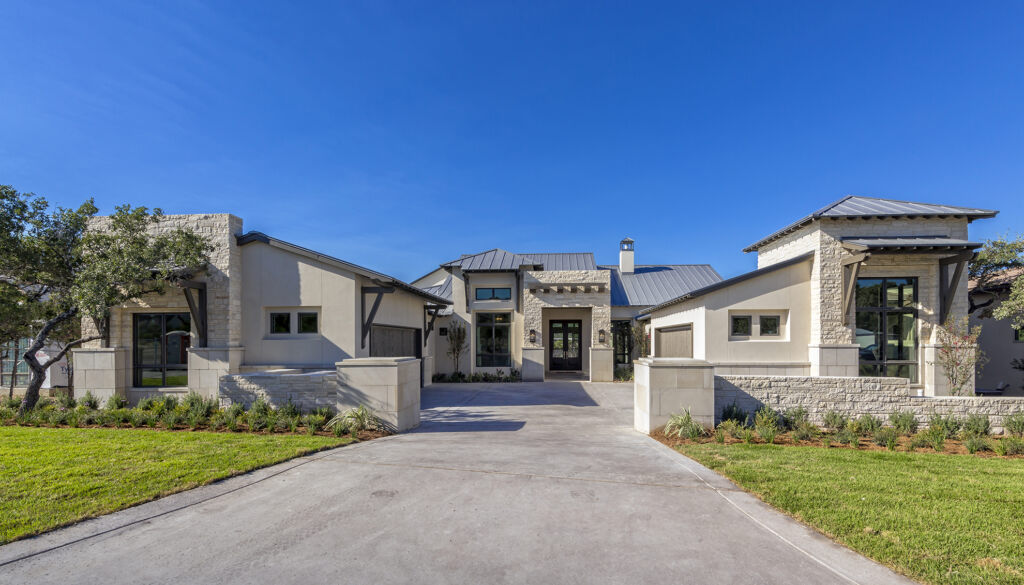
If you’ve spent any time looking at new construction in San Antonio, Boerne, or New Braunfels, you’ve seen these terms everywhere: custom, semi-custom, production. Understanding custom vs production homes is the first step to making an informed decision. Every builder uses them. Very few explain what they actually mean for your experience as a buyer.
I want to fix that — not as a sales pitch for my company, but as an honest breakdown from a builder who’s been in this market for nearly 20 years. Because the differences between these three tiers aren’t just about price. They’re about how many decisions you get to make, who’s managing your build, and what the finished product actually feels like.
Production Homes: The Assembly Line
Production builders — and there are some very big ones operating in the San Antonio metro — are in the volume business. They might have 20, 30, or 50 homes under construction at the same time across multiple communities. Their model works because of standardization. They buy materials in bulk. They use a set of pre-designed floor plans. They run crews through the same sequence on every house.
As a buyer, here’s what that means for you. You pick a floor plan from a catalog — usually somewhere between six and twenty options. You pick a lot from what’s available in their subdivision. Then you go to a design center where you select from pre-approved packages of finishes: countertops, flooring, cabinets, fixtures. Package A, B, or C. Sometimes you can mix and match within a package, sometimes you can’t.
The upside is speed and price. Production builders can often deliver a home faster and at a lower cost per square foot because everything is systemized. If your goal is to get into a new home in a good school district at the most competitive price, this can be the right path.
The downside is that your home will look a lot like your neighbor’s home. The floor plan isn’t designed around how your family actually lives. And the project manager overseeing your build is probably overseeing 15 other builds at the same time. You’re not likely to have direct access to the person making daily decisions on your jobsite.
I’m not here to criticize production builders. They serve an important part of the market. But I want you to understand what you’re getting so you can make an informed choice.
Semi-Custom: More Choices, But Within Limits
Semi-custom sits in the middle, and honestly, this is the most confusing tier because every builder defines it differently. Some semi-custom builders let you modify a base floor plan — add a bedroom, expand the garage, change the kitchen layout. Others let you bring your own plans but limit your material selections to their preferred vendors.
The common thread is that you have more freedom than a production buyer, but there are still guardrails. The builder has a system, and your choices need to work within that system. That’s not inherently bad — it keeps costs predictable and timelines on track.
Where I see buyers get frustrated with semi-custom is when they assume “semi-custom” means they can do anything they want, only to hit a wall when they ask for something that falls outside the builder’s standard process. A different roof pitch. A specific imported tile. A structural change that doesn’t work with the original engineering.
If you’re considering a semi-custom builder, the most important question to ask upfront is: “What exactly can I change, and what can’t I change?” Get that in writing before you sign anything.
Fully Custom: Your Home From a Blank Page
This is what we do at Dynamic Custom Homes, and it’s fundamentally different from both of the tiers above. There’s no catalog. No pre-designed floor plans. No options packages. Your home starts with a conversation about how you live, what you need, what you love, and what your land looks like.
We work with you and your architect — or we help you find one — to design a home that exists nowhere else. Every material, every finish, every structural detail is a decision you make with guidance from me. If you want a 14-foot ceiling in your great room and an 8-foot ceiling in your study because that’s what feels right to you, we do that. If you find a reclaimed beam from a barn in Fredericksburg and want it as your mantle, we make it work.
The other thing that’s fundamentally different is my involvement. I’m not managing 30 builds from a desk. At any given time, Dynamic Custom Homes has a small number of active projects — by design. That means I’m on your jobsite regularly. I know the name of every sub working on your house. If something comes up, you call me directly. You have my cell number from day one, and I answer it.
That level of involvement is only possible because we stay small intentionally. It’s how my grandfather approached building, and it’s the only way I know how to do this work and sleep well at night.
Custom vs Production Homes: What “Custom” Actually Costs
Let’s be honest about price. A fully custom home typically costs more per square foot than a production home. There’s no economy of scale when every house is unique. Design takes longer. Material selections take longer. Construction takes longer because we’re not running the same playbook we ran on the last house.
But here’s what I tell clients who are weighing the investment: you’re building a home that fits your life perfectly. You’re not adapting your life to fit someone else’s floor plan. The kitchen is designed for how you actually cook. The master suite is positioned where you actually want it, oriented toward the view you actually care about. The garage fits the vehicles you actually drive.
And the quality of construction is different when a builder’s name and reputation are attached to a small number of homes rather than hundreds. Every nail, every joint, every finish — it all matters more when my name is on the mailbox too.
Who Custom Isn’t Right For
I’m going to be straightforward about this because I’d rather be honest than oversell. Fully custom building isn’t the right fit for everyone.
If you need to move within six months, custom probably isn’t your path. A fully custom build in the San Antonio area typically runs 12 to 14 months from design through move-in. If time is the priority, a production or semi-custom home that’s already under construction will get you in faster.
If your budget is very tight with no flexibility, the custom process can be stressful. The nature of building one-of-a-kind means there are more variables, and while I work hard to keep costs predictable, the process requires some room to breathe.
And if you don’t enjoy making decisions, custom building involves hundreds of them. Some clients love that. Others find it exhausting. If you’d rather point at a package and say “that one,” there’s no shame in that — and a good semi-custom or production builder can take great care of you.
How to Decide: Custom vs Production Homes
The simplest way to figure out which tier fits is to ask yourself three questions.
How much do I want to control about the design of my home? If the answer is “everything,” you want custom. If the answer is “the big stuff but I don’t care about every detail,” semi-custom may be the sweet spot. If the answer is “just give me a nice home in a good location,” production is a solid choice.
How important is it that my builder knows my name? In a custom build, your builder is your partner. In a production build, your builder is a company. Neither is wrong — but they’re very different experiences.
What does my timeline look like? If you have time to do it right, custom gives you the most control over the outcome. If you need to move quickly, the other tiers will serve you better.
See the Difference for Yourself
The best way to understand what fully custom looks like is to see it. I’d invite you to browse our project portfolio — every home there was designed from scratch for a specific family on a specific piece of land. No two are alike, and that’s the whole point.
If you’re thinking about building in San Antonio, Boerne, New Braunfels, or anywhere in the Hill Country, I’d love to have that first conversation. No pressure, no pitch — just two people talking about what’s possible.